
Bronx Residential Buildings and what homeowners can do
If you own, manage or live in a Bronx residential building, a roof leak doesn’t feel like a surprise anymore but it feels inevitable. One heavy rain, melting snow or sudden temperature drop and suddenly there’s a brown stain on the ceiling, a damp wall or worse buckets on the floor.
This isn’t bad luck. There are real, structural reasons why roof leaks are common in Bronx residential buildings, and once you understand them, you’ll see why so many homeowners feel stuck in a cycle of repeated repairs.
Let’s break the problem down clearly and then talk about solutions.
How to Spot a Roof Leak Before It Becomes an Emergency
Many roof leaks don’t start with dramatic flooding. They begin quietly often months before visible damage appears. In Bronx residential buildings, early warning signs often get ignored until repairs become expensive and urgent.
Watch for subtle red flags like peeling paint near ceilings, musty smells in hallways, unexplained humidity, bubbling plaster or small brown stains that grow after rain. On flat roofs, standing water lasting more than 48 hours is another silent warning sign.
Catching these issues early can save thousands in interior repairs and prevent structural damage. A professional inspection at the right time often means a simple fix instead of a full roof replacement.
Most Bronx homeowners and landlords only act when water starts dripping. This section helps them self identify risk early, positioning your brand as helpful, not salesy.
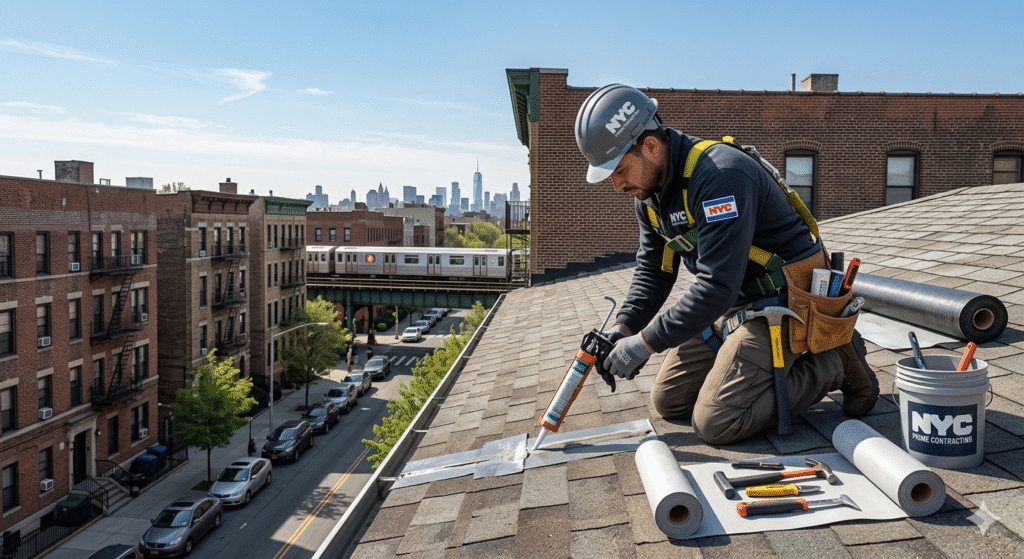
The Real Problem: Bronx Roof Leaks Are a Systemic Issue, Not a One Time Mistake
Many Bronx property owners assume leaks happen because of one cracked shingle or one bad storm. In reality, roof leaks in Bronx buildings result from a combination of aging infrastructure, harsh weather, outdated roofing designs and inconsistent maintenance.
Most residential buildings in the Bronx were constructed decades ago. Roofing materials, drainage systems and insulation methods simply weren’t designed for today’s climate stress or building usage.
That’s why patchwork repairs often fail and leaks keep coming back.
Aging Roofs in the Bronx: When Time Quietly Destroys Protection
One of the biggest common causes of roof leaks is age. Many Bronx residential roofs are 20 to 50 years old, far beyond their intended lifespan.
As materials age, they lose flexibility. Membranes crack, seams separate and flashing corrodes. Even if a roof looks intact from the street, water finds microscopic pathways underneath.
This is especially common in Bronx apartment roof damage, where older flat roofs were never fully replaced, only repaired again and again.
The solution is Regular professional inspections and planned roof replacement timelines prevent emergency leaks and long term water damage.
Bronx Weather Is Brutal on Roofs Especially Flat Ones
The Bronx experiences freeze thaw cycles, heavy rain, snow loads and heat waves sometimes in the same week. Flat roofs, which dominate Bronx residential buildings, suffer the most.
When water sits on a flat roof instead of draining properly, it seeps into seams and weak points. Over time, this leads to Bronx flat roof leaks that seem impossible to stop.
Snow melt is particularly dangerous. Meltwater refreezes at night, expanding cracks and lifting membranes.
Improved drainage systems, regular clearing of debris and weather resistant materials designed for NYC conditions.
Poor Drainage: The Silent Leak Creator Most Owners Ignore
One of the most overlooked Bronx residential roof problems is poor drainage. Roof drains clog with leaves, trash and ice. Water pools instead of flowing away.
Standing water adds weight, accelerates material breakdown and eventually forces water into the building.
Many leaks blamed on “roof failure” are actually drainage failures.
Scheduled drain inspections and upgrades to modern internal drainage systems.
Construction Shortcuts That Come Back to Haunt Bronx Buildings
Older Bronx buildings were often built quickly and cheaply to meet housing demand. Roofing details like flashing, parapets and insulation were not installed with longevity in mind.
Over decades, these shortcuts turn into water damage in Bronx homes that spreads behind walls and ceilings before anyone notices.
Solution: Comprehensive roof assessments and not surface level patch jobs.
Flat Roofs vs Pitched Roofs in Bronx Residential Buildings
| Feature | Flat Roofs (Common in Bronx) | Pitched Roofs |
|---|---|---|
| Drainage | Poor if unmaintained | Naturally sheds water |
| Leak Risk | High | Moderate |
| Maintenance | Frequent | Less frequent |
| Snow Impact | High load | Slides off |
| Lifespan | Shorter | Longer |
This comparison explains why roof leaks are common in Bronx residential buildings becomes clearer once roof design is considered.
Deferred Maintenance: “We’ll Fix It Later” Always Costs More
One of the most painful truths for landlords and homeowners is that delayed repairs multiply damage.
A small leak today becomes mold, insulation rot, electrical risk and ceiling collapse tomorrow. Many Bronx buildings suffer because maintenance is reactive, not preventative.
Solution:
Annual roof maintenance plans that cost less than emergency repairs.
Why Temporary Repairs Don’t Work Long Term
Roof coatings, tar patches and quick fixes offer temporary relief but rarely address underlying problems. These methods often trap moisture inside the roof system, making future leaks worse.
This explains why roof maintenance issues in the Bronx feel never ending.
Solution:
Targeted repairs based on moisture scans and structural evaluation.
Why Temporary Roof Patches Fail in Bronx Buildings
Quick roof patches might seem like a smart short term solution but in Bronx residential buildings, they often make the problem worse. Older structures, layered roofing systems and constant weather exposure cause patched areas to fail quickly.
Temporary fixes don’t address underlying issues like trapped moisture, weakened membranes or improper drainage. Over time, water finds a new path often deeper into the structure leading to mold growth, insulation damage and higher repair costs.
A long term solution focuses on identifying the source of the leak, reinforcing weak areas and ensuring proper water flow. That’s the difference between fixing a symptom and solving the real problem.
Landlords vs Homeowners: Different Pressures, Same Roof Problems
Landlords worry about tenant complaints and violations. Homeowners worry about personal savings and family safety. But the roof doesn’t care who owns the building, the physics are the same.
Understanding the root causes empowers both groups to make smarter decisions.
What Actually Prevents Roof Leaks in Bronx Residential Buildings
Long term solutions include proper insulation, modern membranes, improved drainage and professional maintenance not just surface repairs.
Preventative action costs less than repeated damage.
When Is It Time to Repair vs. Replace a Roof?
One of the most common questions Bronx property owners ask is whether a roof needs repair or full replacement. The answer depends on age, damage spread and how often leaks have occurred.
If leaks appear in multiple areas, repairs keep recurring or the roof is over 20 years old, replacement often becomes the more cost effective option. On the other hand, isolated damage caught early may only require targeted repairs.
A professional inspection removes the guesswork. Knowing the true condition of your roof helps you plan financially and avoid emergency repairs during peak storm seasons.
Your Home Deserves a Roof That Actually Protects It
Water stains, dripping ceilings and constant patchwork repairs are signs your roof needs expert attention. At NYC Prime Contracting, we help homeowners fix the problem at its root, not just the symptoms.
Talk to a trusted NYC roofing expert today.
Serving all neighborhoods across the Bronx.
Roofing Frequently Asked Questions
Expert insights for Bronx property owners.
1. Why do Bronx buildings leak more than newer developments?
2. Are flat roofs always a bad choice?
3. Can one leak cause major damage?
4. How often should roofs be inspected?
5. Is replacement better than repair?
Conclusion: Understanding the Problem Is the First Step to Stopping It
Now you know why roof leaks are common in Bronx residential buildings and why they keep returning when only surface fixes are used. Aging infrastructure, harsh weather, flat roof designs and deferred maintenance all play a role.
The good news? Once you understand the real causes, you can take smarter, preventative action that saves money, protects property and restores peace of mind.
A roof shouldn’t be a constant worry. With the right knowledge and planning, it doesn’t have to be.